To import lithium batteries from China to Pakistan, you choose a verified supplier, collect the battery’s safety documents, ship it as Class 9 dangerous goods, and clear it through Pakistan Customs under PCT code 8507.6000. Each step has its own paperwork, and missing one can hold a shipment at port.
This guide walks through the process in order, with the documents, shipping rules and customs points that catch first time importers out.
Why Pakistan Imports Lithium Batteries from China
Pakistan’s lithium battery market is almost entirely imported. According to IEEFA, the country imported an estimated 1.25 GWh of lithium ion battery packs in 2024, and Dawn reports imports rose to about 2.5 GWh to 3.0 GWh in 2025.
Most of that comes from China, which makes the bulk of the world’s LiFePO4 cells. Local assembly is growing, but Pakistan’s officials note that cells and components are still imported and only assembled locally.
How to Import Lithium Batteries from China to Pakistan: Step by Step
Step 1: Define exactly what you are buying
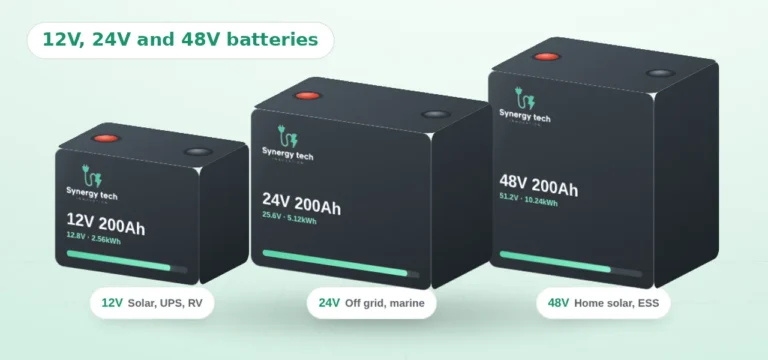
Fix the chemistry, voltage, capacity, IP rating and quantity before you ask for quotes. LiFePO4 is the usual choice for solar and backup, in 12V, 24V or 48V.
The IP rating matters more than most buyers expect. Pakistan Customs sets different minimum values for IP20, IP21 and IP65 lithium batteries, so it must appear clearly on your invoice.
Step 2: Verify the supplier
Ask for the factory’s business licence, its address and recent export references. Then order a sample and test its real capacity before placing a full order.
- Request a video call from the production floor.
- Ask for per cell test data and the cell brand used.
- Check that the model number matches across the datasheet, test reports and labels.
- Agree on warranty terms in writing.
Step 3: Collect the battery documents
Lithium batteries cannot move without their safety paperwork. Ask for these for the exact model before you pay the balance.
| Document | What it proves | Who needs it |
|---|---|---|
| UN38.3 test report and test summary | The battery passed the eight UN transport tests | Shipping line, airline, freight forwarder |
| MSDS (safety data sheet) | Chemistry, hazards and handling rules | Freight forwarder, customs |
| Dangerous goods declaration | The cargo is declared as Class 9 | Carrier |
| Commercial invoice and packing list | Value, quantity, weights and specs including IP rating | Customs |
| Bill of lading or air waybill | Proof of shipment and ownership | Customs, port |
| Certificate of origin | Goods are made in China | Customs, for any trade agreement concession |
Step 4: Register as an importer in Pakistan
You need a National Tax Number (NTN) and access to Pakistan Customs’ WeBOC system, usually through a licensed customs clearing agent. Your income tax filer status can change the withholding tax charged at import.
Shipping, Customs Clearance and Arrival
Step 5: Book dangerous goods freight
Lithium ion batteries shipped on their own are classed as UN3480, Class 9 dangerous goods. Your forwarder must accept dangerous goods and pack to the right rules.
We cover the sea and air options in the next section, because the choice changes cost and paperwork.
Step 6: Clear customs and pay duties
Your clearing agent files the goods declaration in WeBOC with the invoice, packing list and documents above. Customs then assesses duties and taxes on the higher of your declared value and its own valuation ruling.
Step 7: Inspect before you sell
Check a sample of units on arrival for physical damage, voltage and BMS function. Report problems to the supplier quickly, because warranty claims weaken with time.
Shipping Lithium Batteries: Sea vs Air
| Factor | Sea freight | Air freight |
|---|---|---|
| Rule book | IMDG Code, packing instruction P903 | IATA Dangerous Goods Regulations, packing instruction 965 |
| Aircraft | Not applicable | UN3480 batteries are forbidden on passenger aircraft; cargo aircraft only |
| State of charge | No fixed limit in the IMDG Code itself | Must not exceed 30% of rated capacity |
| Typical use | Bulk orders of storage batteries | Samples and urgent small orders |
For most importers, sea freight into Karachi or Port Qasim is the practical route. Large storage batteries are heavy, and air rules for UN3480 are strict and costly.
Always confirm the current rules with your forwarder, since IATA and IMDG requirements are updated regularly. For instance, IATA extended the 30% state of charge rule to some batteries packed with equipment from 1 January 2026.
Customs Duty and Taxes on Lithium Batteries in Pakistan
Lithium ion batteries fall under PCT code 8507.6000. Duties change with almost every federal budget, so treat the figures below as a starting point and confirm them before you price an order.
Customs valuation ruling for lithium batteries
In February 2025, Pakistan Customs issued Valuation Ruling 1964 of 2025 to stop under invoicing of lithium batteries. It sets minimum customs values by IP rating for all origins.
| Battery type | PCT code | Customs value per kg | Customs value per kW |
|---|---|---|---|
| Lithium ion battery (IP20) | 8507.6000.1000 | USD 7 | USD 70 |
| Lithium ion battery (IP21) | 8507.6000.1100 | USD 8 | USD 80 |
| Lithium ion battery (IP65) | 8507.6000.1200 | USD 9 | USD 90 |
The ruling does not apply to lithium batteries for mobile phones, laptops and tablets. Ask your clearing agent which basis customs applies to your goods, because a higher IP rating raises the assessed value.
The duties and taxes that apply
Pakistan’s Trade Information Portal listed a 10% customs duty and an 18% sales tax on PCT 8507.6000 when we checked. Regulatory duty and withholding income tax are added on top, and their rates have changed between budgets.
Together, these add up quickly. IEEFA estimated in 2025 that taxes and duties combined for an effective rate of about 48% on imported battery energy storage systems.
Check the live rates on the Trade Information Portal of Pakistan (tipp.gov.pk) or with your clearing agent on the day you import. Some separate concessions exist for battery parts, such as cells imported for local battery assembly.
Is a PSQCA Certificate Required?
At the time of writing, we found no PSQCA compulsory certification listed for imported lithium batteries. The Pakistan Standards and Quality Control Authority runs a mandatory scheme, but its list covers mostly food and a limited set of other products.
That is likely to change. In 2026 the government directed PSQCA to develop lithium battery standards as part of a national battery manufacturing policy, so check the latest position before each order.
Common Mistakes First Time Importers Make
- Leaving the IP rating off the invoice, which slows assessment.
- Declaring a value far below the valuation ruling and facing reassessment.
- Booking a forwarder that does not handle Class 9 dangerous goods.
- Trying to send standalone lithium batteries on passenger flights.
- Paying in full before receiving the UN38.3 report and MSDS.
- Skipping a sample test and finding low capacity after arrival.
- Pricing an order with old duty rates from a previous budget.
Import Lithium Batteries from China to Pakistan: Checklist
- Product specs fixed: chemistry, voltage, capacity, IP rating, quantity.
- Supplier verified and a sample tested.
- UN38.3 report, MSDS and certificate of origin received for the exact model.
- NTN in place and a licensed clearing agent appointed.
- Dangerous goods forwarder booked, usually by sea.
- Duties checked on the day of import against current rates and the valuation ruling.
- Arrival inspection planned.
Where Synergy Technology Fits
We are a lithium battery factory in Shenzhen, shipping LiFePO4 batteries, ESS batteries and lithium cells to buyers in more than 25 countries. Every order ships with CE, UN38.3 and MSDS documents, and we state the IP rating and full specs on the invoice.
We can pack and hand over to your dangerous goods forwarder, and we welcome sample orders before bulk purchases. We do not handle Pakistan customs clearance, so you will still need a local clearing agent.
Before you order, our guides to lithium battery cells and lithium battery for inverter use can help you pick the right product.
Sources and Methodology
Customs values come from Pakistan Customs Valuation Ruling 1964 of 2025, published by the FBR and reported by ProPakistani and Profit. The 10% customs duty and 18% sales tax were seen on the Trade Information Portal of Pakistan listing for 8507.6000; we could not load the live page to confirm every levy, so rates must be rechecked.
Import volumes come from IEEFA’s 2025 report and Dawn, and the 48% effective rate is IEEFA’s estimate as reported by ESS News. Shipping rules come from IATA guidance, Maersk and FedEx dangerous goods pages, and the IMDG Code summary by Battery Design.
PSQCA status reflects ProPakistani and Profit reporting on the national battery policy in 2026. This guide is general information, not legal or customs advice, and rules can change at any budget.
Need a price for your country?
Factory-direct pricing, shipping to 25+ countries, reply within 24 hours.
Frequently Asked Questions
Click on a question to see the answer
What is the HS code for lithium batteries in Pakistan?
Lithium ion batteries fall under PCT code 8507.6000. Pakistan Customs splits it further by IP rating, such as 8507.6000.1000 for IP20 batteries.
How much duty is charged on lithium batteries in Pakistan?
The Trade Information Portal of Pakistan listed 10% customs duty and 18% sales tax on 8507.6000, plus regulatory duty and income tax. IEEFA estimated the combined effective rate on imported battery storage at about 48% in 2025, so check current rates before you import.
What is the customs value of lithium batteries in Pakistan?
Valuation Ruling 1964 of 2025 sets USD 7, 8 and 9 per kg, or USD 70, 80 and 90 per kW, for IP20, IP21 and IP65 batteries. It does not cover batteries for phones, laptops and tablets.
Can I ship lithium batteries from China to Pakistan by air?
Yes, but only on cargo aircraft for standalone batteries (UN3480), at no more than 30% state of charge. For bulk storage batteries, sea freight is usually cheaper and simpler.
Which documents do I need to import lithium batteries?
You need a UN38.3 test report, MSDS, commercial invoice, packing list, bill of lading, certificate of origin and a dangerous goods declaration. Your clearing agent files these with the goods declaration in WeBOC.
Do I need a PSQCA certificate for lithium batteries?
At the time of writing we found no PSQCA compulsory certification listed for imported lithium batteries. The government was developing battery standards in 2026, so check before each order.
Why does the IP rating matter for import?
Pakistan Customs applies a different minimum value to IP20, IP21 and IP65 batteries. If the invoice does not show it, assessment can be delayed.
Which port should I use for lithium batteries?
Most sea shipments arrive at Karachi Port or Port Qasim. Your forwarder must be able to handle Class 9 dangerous goods at that port.
How can I check a Chinese battery supplier?
Ask for the business licence, a factory video call, per cell test data and export references. Then test a sample's real capacity before you place a bulk order.
Does Synergy Technology handle Pakistan customs clearance?
No. We supply the batteries with CE, UN38.3 and MSDS documents and hand over to your forwarder, but you need a licensed clearing agent in Pakistan.