

To import lithium batteries from China to Pakistan, you choose a verified supplier, collect the battery’s safety documents, ship it as Class 9 dangerous goods, and clear it through Pakistan Customs under PCT code 8507.6000. Each step has its own paperwork, and missing one can hold a shipment at port. This guide walks through the process in order, with the documents, shipping rules and customs points that catch first time importers out. Why Pakistan Imports Lithium Batteries from China Pakistan’s lithium battery market is almost entirely imported. According to IEEFA, the country imported an estimated 1.25 GWh of lithium ion battery packs in 2024, and Dawn reports imports rose to about 2.5 GWh to 3.0 GWh in 2025. Most of that comes from China, which makes the bulk of the world’s LiFePO4 cells. Local assembly is growing, but Pakistan’s officials note that cells and components are still imported and only assembled locally. How to Import Lithium Batteries from China to Pakistan: Step by Step Step 1: Define exactly what you are buying Fix the chemistry, voltage, capacity, IP rating and quantity before you ask for quotes. LiFePO4 is the usual choice for solar and backup, in 12V, 24V or 48V. The IP rating matters more than most buyers expect. Pakistan Customs sets different minimum values for IP20, IP21 and IP65 lithium batteries, so it must appear clearly on your invoice. Step 2: Verify the supplier Ask for the factory’s business licence, its address and recent export references. Then order a sample and test its real capacity before placing a full order. Request a video call from the production floor. Ask for per cell test data and the cell brand used. Check that the model number matches across the datasheet, test reports and labels. Agree on warranty terms in writing. Step 3: Collect the battery documents Lithium batteries cannot move without their safety paperwork. Ask for these for the exact model before you pay the balance. Document What it proves Who needs it UN38.3 test report and test summary The battery passed the eight UN transport tests Shipping line, airline, freight forwarder MSDS (safety data sheet) Chemistry, hazards and handling rules Freight forwarder, customs Dangerous goods declaration The cargo is declared as Class 9 Carrier Commercial invoice and packing list Value, quantity, weights and specs including IP rating Customs Bill of lading or air waybill Proof of shipment and ownership Customs, port Certificate of origin Goods are made in China Customs, for any trade agreement concession Step 4: Register as an importer in Pakistan You need a National Tax Number (NTN) and access to Pakistan Customs’ WeBOC system, usually through a licensed customs clearing agent. Your income tax filer status can change the withholding tax charged at import. Shipping, Customs Clearance and Arrival Step 5: Book dangerous goods freight Lithium ion batteries shipped on their own are classed as UN3480, Class 9 dangerous goods. Your forwarder must accept dangerous goods and pack to the right rules. We cover the sea and air options in the next section, because the choice changes cost and paperwork. Step 6: Clear customs and pay duties Your clearing agent files the goods declaration in WeBOC with the invoice, packing list and documents above. Customs then assesses duties and taxes on the higher of your declared value and its own valuation ruling. Step 7: Inspect before you sell Check a sample of units on arrival for physical damage, voltage and BMS function. Report problems to the supplier quickly, because warranty claims weaken with time. Shipping Lithium Batteries: Sea vs Air Factor Sea freight Air freight Rule book IMDG Code, packing instruction P903 IATA Dangerous Goods Regulations, packing instruction 965 Aircraft Not applicable UN3480 batteries are forbidden on passenger aircraft; cargo aircraft only State of charge No fixed limit in the IMDG Code itself Must not exceed 30% of rated capacity Typical use Bulk orders of storage batteries Samples and urgent small orders For most importers, sea freight into Karachi or Port Qasim is the practical route. Large storage batteries are heavy, and air rules for UN3480 are strict and costly. Always confirm the current rules with your forwarder, since IATA and IMDG requirements are updated regularly. For instance, IATA extended the 30% state of charge rule to some batteries packed with equipment from 1 January 2026. Customs Duty and Taxes on Lithium Batteries in Pakistan Lithium ion batteries fall under PCT code 8507.6000. Duties change with almost every federal budget, so treat the figures below as a starting point and confirm them before you price an order. Customs valuation ruling for lithium batteries In February 2025, Pakistan Customs issued Valuation Ruling 1964 of 2025 to stop under invoicing of lithium batteries. It sets minimum customs values by IP rating for all origins. Battery type PCT code Customs value per kg Customs value per kW Lithium ion battery (IP20) 8507.6000.1000 USD 7 USD 70 Lithium ion battery (IP21) 8507.6000.1100 USD 8 USD 80 Lithium ion battery (IP65) 8507.6000.1200 USD 9 USD 90 The ruling does not apply to lithium batteries for mobile phones, laptops and tablets. Ask your clearing agent which basis customs applies to your goods, because a higher IP rating raises the assessed value. The duties and taxes that apply Pakistan’s Trade Information Portal listed a 10% customs duty and an 18% sales tax on PCT 8507.6000 when we checked. Regulatory duty and withholding income tax are added on top, and their rates have changed between budgets. Together, these add up quickly. IEEFA estimated in 2025 that taxes and duties combined for an effective rate of about 48% on imported battery energy storage systems. Check the live rates on the Trade Information Portal of Pakistan (tipp.gov.pk) or with your clearing agent on the day you import. Some separate concessions exist for battery parts, such as cells imported for local battery assembly. Is a PSQCA Certificate Required? At the time of writing, we found no PSQCA compulsory certification listed for imported lithium batteries. The Pakistan Standards

Solar Battery 200Ah: Capacity, Runtime and Panels Needed
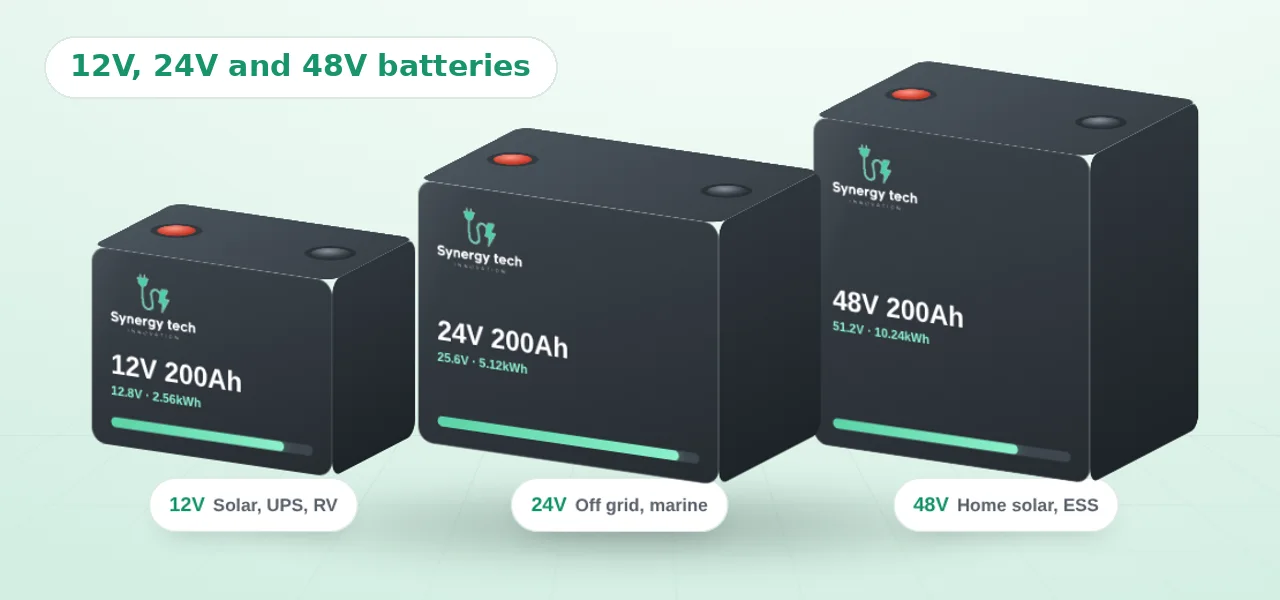
A solar battery 200Ah stores the power your solar panels make during the day so you can use it at night or during a power cut. Its real size depends on its voltage: a 12V 200Ah lithium battery holds 2.56 kWh, while a 48V 200Ah model holds 10.24 kWh. This guide covers how much a 200Ah solar battery stores, how long it runs common appliances, how many panels it needs and which type to choose. What Is a Solar Battery 200Ah? A solar battery 200Ah is a deep cycle battery rated to deliver 200 amp hours, built to charge from solar panels and discharge every day. It sits between the solar charge controller or hybrid inverter and your home loads. “Deep cycle” is the key part. A car battery gives short bursts of current, while a solar battery is made to be drained and refilled thousands of times. How Much Energy Does a 200Ah Solar Battery Store? Amp hours alone do not tell you the energy. Multiply by the battery voltage to get watt hours, then divide by 1,000 for kWh. 200Ah battery Nominal voltage Stored energy Usable for daily cycling 12V lead acid or gel 12V 2.4 kWh About 1.2 kWh at 50% depth of discharge 12V LiFePO4 12.8V 2.56 kWh About 2.4 kWh at 95% usable 24V LiFePO4 25.6V 5.12 kWh About 4.9 kWh 48V LiFePO4 51.2V 10.24 kWh About 9.7 kWh So a “200Ah” label can mean anything from about 1.2 kWh of daily usable energy to almost 10 kWh. Always compare solar batteries by usable kWh at the voltage your system runs on. Types of 200Ah Solar Battery Four chemistries are sold as solar batteries. They differ most in how deeply you can discharge them and how many cycles they last. Type Recommended depth of discharge Example rated cycle life Maintenance Flooded lead acid About 50% Short; varies widely by model Water top ups AGM About 50% About 500 cycles at 50% (Deka 8A AGM) None Gel About 50% About 1,000 cycles at 50% (Deka 8G gel) None, but needs a gel charge profile LiFePO4 lithium 90% to 95% 4,000+ cycles (Synergy rating) None The lead acid examples are Deka’s published figures, reported by Sunwize. Other makers rate their own models differently, so check the datasheet of the battery you are offered. Why lithium wins for daily solar use Solar batteries cycle every single day, so cycle life decides how long they last. A battery rated for 1,000 cycles reaches that in under three years of daily use, while 4,000 cycles is over ten years. Lithium also returns more of the energy you put in. That matters with solar, because every lost watt hour is panel output you paid for. How Long Will a 200Ah Solar Battery Last? A 12V 200Ah LiFePO4 battery gives about 2.19 kWh at the plug, after 95% usable depth and a 90% efficient inverter. Divide that by an appliance’s watts to get its runtime. Appliance on a 12V 200Ah LiFePO4 Assumed power Approximate runtime Ceiling fan 75W About 29 hours Laptop 60W About 36 hours LED TV 100W About 22 hours Fridge (average draw) 150W About 15 hours Mixed load 1,000W About 2.2 hours The powers are typical round figures, and your appliances may differ. A 24V model doubles each runtime, and a 48V model quadruples it. How Many Solar Panels Charge a 200Ah Battery? Take the energy you need to refill, divide by your daily peak sun hours, then allow for losses. We use 5 peak sun hours and a 75% system factor for wiring, heat and controller losses. 200Ah LiFePO4 battery Energy to refill from 10% Panel power needed Charge current 12V (12.8V) About 2.3 kWh About 615W About 48A 24V (25.6V) About 4.6 kWh About 1,230W About 48A 48V (51.2V) About 9.2 kWh About 2,460W About 48A Notice the charge current stays the same at every voltage. That is because panel power and battery energy both double together, so one 50A to 60A MPPT controller rating fits all three. Your local peak sun hours change the panel figure. Check your city on the World Bank’s free Global Solar Atlas, which publishes solar data for every country including Pakistan. Choosing the charge controller Use an MPPT controller or a hybrid inverter with a lithium charge profile. Its output current should be at least the panel power divided by the battery voltage. Its maximum input voltage must also suit your panel string. Exceeding it can destroy the controller, so check the panel’s open circuit voltage on cold mornings too. How to Choose a 200Ah Solar Battery 1. Match the voltage to your inverter Small 1 kVA systems use 12V, mid sized systems use 24V and most 3 kVA and larger hybrid inverters use 48V. Our lithium battery for inverter guide explains how to check. 2. Compare usable kWh, not Ah A 200Ah lithium battery at 12.8V gives about twice the daily usable energy of a 200Ah lead acid battery. So the cheaper label is not always the cheaper battery. 3. Check the BMS current The battery management system limits how much current the battery can supply. It must cover your inverter’s full load and your controller’s charge current. 4. Ask for cycle life conditions and documents Ask at what depth of discharge the cycle figure was measured. Then request the datasheet, UN38.3 report and MSDS for the exact model. Solar Battery 200Ah Care Tips Keep the battery shaded and ventilated; heat shortens every battery’s life. Set the controller to the battery maker’s charge voltages. Turn off equalise for lithium batteries. Do not leave lead acid batteries partly charged for long, or they sulfate. Check terminals for tightness every few months. Where Synergy Technology Fits Our 200Ah lithium battery comes in 12V, 24V and 48V, storing 2.56 kWh, 5.12 kWh and 10.24 kWh. Each one uses Grade A LiFePO4 cells and a smart 200A BMS, and is rated for 4,000+ cycles with about 95% usable energy. We build them in
48V Lithium Battery: The Complete Guide
A 48V lithium battery is a battery bank built from 16 lithium iron phosphate (LiFePO4) cells wired in series, giving a nominal voltage of 51.2V. It is the standard size for home solar, inverter backup, golf carts and small energy storage systems. This guide explains what the “48V” label really means, how to read the capacity, which charge settings to use, and what to check before you buy one. What Is a 48V Lithium Battery? A 48V lithium battery is a rechargeable pack whose working voltage sits around 48 to 52 volts, made from lithium cells and controlled by a battery management system (BMS). For solar and backup use, almost every model on the market uses LiFePO4 chemistry. The BMS is the small circuit board inside the case. It stops the cells from overcharging, over discharging, overheating or shorting, and it keeps the 16 cells balanced. Why the label says 48V but the spec sheet says 51.2V Each LiFePO4 cell has a nominal voltage of 3.2V. Sixteen cells in series give 16 × 3.2 = 51.2V, so the “48V” name is a system class, not the exact voltage. The name comes from older lead acid banks, where four 12V batteries made a 48V system. Lithium packs kept the class name so they fit the same 48V inverters and chargers. That difference matters when you compare listings. A pack sold as “48V 100Ah” stores 5.12 kWh if it is a true 16 cell LiFePO4 pack, but only 4.8 kWh if the seller calculates at 48V. How Much Energy Does a 48V Lithium Battery Store? To find the energy, multiply nominal voltage by amp hours, then divide by 1,000 to get kilowatt hours (kWh). Always compare batteries in kWh, because amp hours alone hide the voltage. Battery Nominal voltage Capacity Stored energy 12V LiFePO4 (4 cells) 12.8V 100Ah 1.28 kWh 24V LiFePO4 (8 cells) 25.6V 100Ah 2.56 kWh 48V LiFePO4 (16 cells) 51.2V 100Ah 5.12 kWh 48V LiFePO4 (16 cells) 51.2V 200Ah 10.24 kWh The figures above are simple arithmetic from voltage and capacity. Usable energy is a little lower, because the BMS keeps a small reserve at the top and bottom of the charge. A quick runtime estimate Take a 48V 100Ah battery that stores 5.12 kWh. If about 95% of that is usable and your inverter is 90% efficient, you get roughly 5.12 × 0.95 × 0.90 = 4.38 kWh at the plug. So a steady 1,000W load would run for about 4.4 hours. Check your own inverter’s efficiency on its datasheet, since it changes the answer. Why Choose 48V Instead of 12V or 24V? Power equals voltage times current. At a higher voltage the same power needs far less current, and current is what heats cables and wastes energy. System Current needed for a 5,000W load What it means 12V (12.8V nominal) About 391A Very thick cables, high heat, large fuses 24V (25.6V nominal) About 195A Workable for mid sized systems 48V (51.2V nominal) About 98A Normal cable sizes, lower losses Cable heat loss rises with the square of current. With the same cable, a 51.2V system loses about one sixteenth of the energy a 12.8V system would lose at the same power. That is why many home inverters above 3 kW are built for 48V. A 12V bank simply cannot feed them without very heavy wiring. When 12V or 24V still makes sense Small loads such as a camper fridge, lights or a boat’s electronics often run directly on 12V. If your appliances and charger are all 12V and your load is light, a 48V bank adds converters you do not need. 48V Lithium Battery Voltage Chart A LiFePO4 voltage curve is very flat in the middle, so voltage is a rough guide to charge level, not an exact one. Use the BMS reading or a shunt monitor for accurate state of charge. Point Per cell 16 cell pack Maximum charge limit 3.65V 58.4V Typical full charge setting 3.45V to 3.60V 55.2V to 57.6V Nominal (rated) voltage 3.2V 51.2V Common low voltage cutoff 2.8V 44.8V Absolute minimum 2.5V 40.0V The pack values are per cell figures multiplied by 16. Your battery’s own datasheet always takes priority over a general chart. How to Charge a 48V Lithium Battery Use a charger or inverter that has a lithium (LiFePO4) profile, or one that lets you set the voltages yourself. A lead acid profile with an equalise stage can push the pack above its safe limit. Charge settings vary by maker We compared four published 48V LiFePO4 datasheets. They all stay at or below the 3.65V per cell ceiling, but their recommended full charge settings differ by more than 3V. Datasheet Recommended charge voltage Stated maximum Discover DLP E 48V 55.2V bulk and absorption, 53.6V float Not stated on the sheet Flin Energy 16S 100Ah 56V 56.8V Rhino 2 (FRHNO 48143 G2) 55.6V to 57V 57V Evlithium 51.2V 100Ah Charge cutoff 58.4V 58.4V The lesson is simple: there is no single correct charge voltage for every 48V lithium battery. Set your charger to the numbers your battery maker publishes, and ask for them in writing before you buy. Temperature rules Most 48V LiFePO4 datasheets allow charging only between about 0°C and 45°C to 55°C. Charging below freezing can damage the cells, so a good BMS blocks it. Discharging is allowed over a wider range, often down to about minus 20°C. In hot climates, keep the battery out of direct sun and give it airflow. One 48V Battery or Four 12V Batteries in Series? You can build a 48V bank from four 12V lithium batteries in series. Inside, both use the same LiFePO4 cells, but the BMS design is different. A single 48V pack has one BMS that watches all 16 cells together. Four separate 12V batteries each have their own BMS, and none of them sees the whole string. If one 12V battery shuts off, the other three can be left carrying the full system voltage. Only wire 12V batteries
Lithium Battery for Inverter: Backup Time, Sizing and Setup
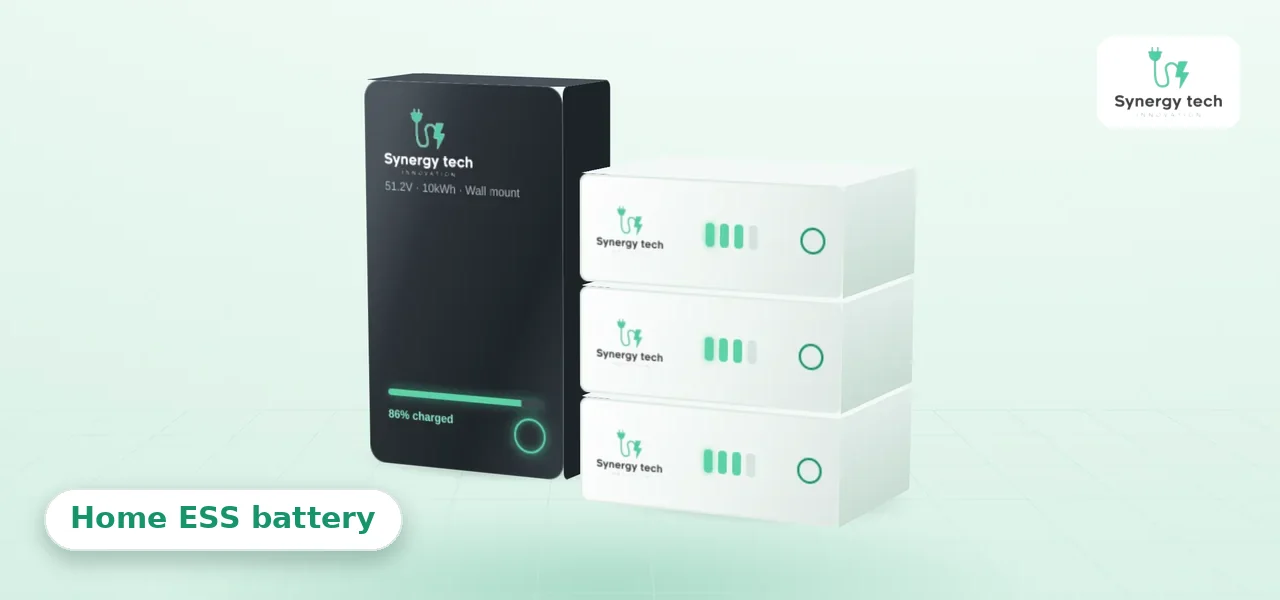
A lithium battery for inverter backup is a LiFePO4 battery that replaces the lead acid or tubular battery behind a home UPS or solar inverter. It gives more usable energy, charges faster, weighs about a third as much and lasts several times longer. This guide shows how to work out backup time, how lithium compares with a tubular battery, how to size one and how to check it will work with your inverter. Why Use a Lithium Battery for Inverter Backup? A lithium battery for inverter use lets you take most of its stored energy every day without harming it. A lead acid battery, by contrast, should normally be discharged only to about half its capacity. That one difference changes everything else. You get more backup from the same rating, a smaller and lighter battery, and many more years of service. Lithium vs tubular battery at a glance Factor 12V 150Ah tubular lead acid 12V 200Ah LiFePO4 Stored energy 1.8 kWh at the 20 hour rate 2.56 kWh Usable energy for daily cycling About 0.9 kWh at 50% depth of discharge About 2.4 kWh at 95% usable Weight About 54 kg to 55 kg About 21 kg Rated cycle life About 1,100 cycles at 80% depth of discharge (one maker’s rating) 4,000+ cycles (Synergy rating) Maintenance Water top ups for flooded types None Tubular weights and cycle rating come from published 150Ah datasheets, including Fronus and PCE Power. The lithium figures are for our own 12V 200Ah LiFePO4 battery. Lead acid loses capacity under heavy load A lead acid battery’s Ah rating is measured at a slow 10 or 20 hour discharge. At a faster rate it delivers far less: one 150Ah VRLA datasheet lists only 93Ah at a 1 hour rate. LiFePO4 holds its capacity much better at high current. So when you run a fridge, fans and lights together, the real gap between the two is wider than the label suggests. How to Calculate Inverter Backup Time Use this formula for any battery type. Backup time in hours = battery Ah × battery voltage × usable depth × inverter efficiency ÷ load in watts. Battery Calculation for a 300W load Backup time 12V 150Ah tubular 150 × 12 × 0.5 × 0.9 ÷ 300 About 2.7 hours 12V 100Ah LiFePO4 100 × 12.8 × 0.95 × 0.9 ÷ 300 About 3.6 hours 12V 200Ah LiFePO4 200 × 12.8 × 0.95 × 0.9 ÷ 300 About 7.3 hours These use 90% inverter efficiency, 50% usable depth for lead acid and 95% for lithium. Check your own inverter’s efficiency, since many quick calculators skip the depth of discharge step and overstate lead acid backup. Work out your load first Add the watts of everything that runs during a power cut. A typical load might be three ceiling fans at 75W, five LED lights at 15W, a router at 20W and a TV at 100W, which comes to 420W. Use the rated wattage on each appliance label where you can. Fans on low speed and inverter ACs draw less than their maximum, so measured use is often lower. How to Size a Lithium Battery for Your Inverter Turn the formula around to find the capacity you need. Battery Ah = load in watts × backup hours ÷ (battery voltage × usable depth × inverter efficiency). For example, a 500W load for 4 hours on a 12V LiFePO4 battery needs 500 × 4 ÷ (12.8 × 0.95 × 0.9), which is about 183Ah. So a 200Ah lithium battery covers it with a little room to spare. The same job with lead acid at 50% depth needs about 370Ah. That is roughly two and a half 150Ah tubular batteries, at well over 100 kg. Match the battery voltage to your inverter The battery voltage must match the inverter’s DC input. Small home UPS units are usually 12V or 24V, while larger hybrid solar inverters usually run on 48V. Inverter size Common battery voltage Lithium option Up to about 1 kVA 12V 12.8V LiFePO4, 100Ah to 200Ah About 1.5 kVA to 3 kVA 24V 25.6V LiFePO4, 100Ah to 200Ah 3 kVA and above, hybrid solar 48V 51.2V LiFePO4, 5 kWh to 10 kWh Your inverter’s manual states its exact battery voltage. For larger systems, our 48V lithium battery guide explains why higher voltage needs less current. Will a Lithium Battery Work With My Inverter? Most modern inverters work with lithium, but older UPS units may need a settings check. Look for a battery type setting in the menu, often labelled “Li”, “LFP” or “User”. Charge settings for a 12V LiFePO4 battery Setting Per cell 12V (4 cell) battery Maximum charge voltage 3.65V 14.6V Typical bulk or absorption 3.45V to 3.60V 13.8V to 14.4V Typical low voltage cutoff About 2.8V About 11.2V Always use the numbers from your battery’s datasheet, since makers differ. For 24V batteries double these figures, and for 48V multiply by four. Turn off equalise mode Many lead acid chargers run a periodic equalise stage at a high voltage. A lithium battery does not need it, and the extra voltage can trip the BMS or stress the cells. Check the charging current Lithium accepts a much higher charge current than lead acid, but the inverter must not exceed the battery’s rated charge current. Set the inverter’s maximum charge current to the value on the battery datasheet. Hybrid solar inverters and communication Hybrid inverters often read the battery’s state of charge over a CAN or RS485 cable. Ask the battery supplier which inverter brands its BMS protocol supports before you buy. Is a Lithium Battery for Inverter Use Worth the Price? A lithium battery costs more upfront than a tubular battery of the same Ah rating. But comparing labels is misleading, because lithium delivers about twice the usable energy per Ah and lasts several times as many cycles. The fair comparison is cost per usable kWh over the battery’s life. Divide the price by usable kWh, then by rated cycles, and compare
Lithium Battery Cells: How They Work, Types and Grades
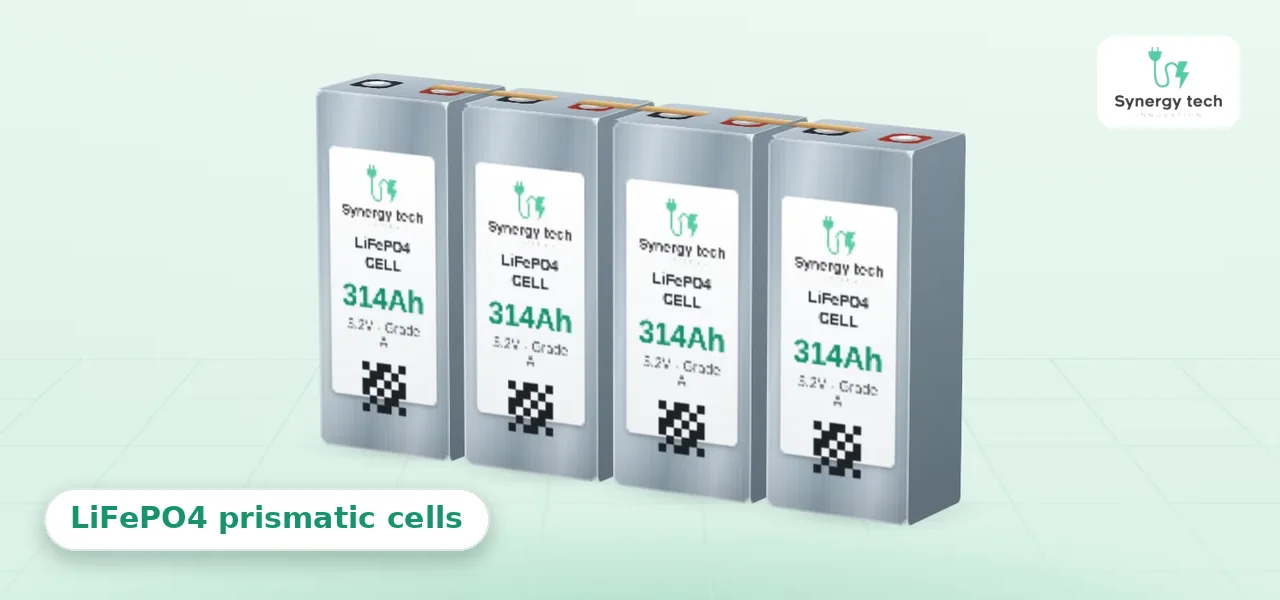
Lithium battery cells are the single units that store energy inside every lithium battery pack, from a phone to a 500 kWh storage cabinet. A cell has one positive electrode, one negative electrode, a separator and an electrolyte, and packs are built by wiring many cells together. This guide explains how a cell works, the main formats and chemistries, how to read a cell datasheet, and how to check quality before you buy. What Are Lithium Battery Cells? Lithium battery cells are rechargeable electrochemical units that move lithium ions between two electrodes to store and release electricity. One cell gives a fixed voltage, so batteries combine cells in series for voltage and in parallel for capacity. A cell is not a battery on its own, so a finished battery adds a battery management system (BMS), wiring, a case and often a heater or cooling. How a Lithium Cell Works Every lithium ion cell has four main parts, as Argonne National Laboratory describes them. These are the cathode, the anode, a separator and the electrolyte. Part What it is What it does Cathode (positive) A lithium metal compound, such as lithium iron phosphate Holds lithium when the cell is empty Anode (negative) Usually graphite on copper foil Holds lithium when the cell is full Separator A thin porous plastic film Lets ions pass but stops the electrodes touching Electrolyte A lithium salt dissolved in a solvent Carries lithium ions between the electrodes Charging and discharging When you charge a cell, lithium ions leave the cathode, cross the separator and slot between the layers of the graphite anode. This process is called intercalation. When you use the cell, the ions travel back to the cathode. At the same time, electrons flow through your device, and that flow is the electric current. The separator matters more than its thickness suggests. If it fails and the electrodes touch, the cell shorts internally, which is why cell quality and BMS protection go together. Types of Lithium Battery Cells by Format The same chemistry can be packed into three shapes. In turn, the shape affects pack size, cooling and how many cells you need. Format Common sizes Strengths Typical uses Cylindrical 18650 (18mm × 65mm), 21700 (21mm × 70mm) Strong steel can, mature mass production Power tools, e-bikes, some EVs and small packs Prismatic 100Ah, 280Ah, 314Ah LiFePO4 Large capacity, few cells per pack, easy to stack Home and commercial energy storage Pouch Varies by maker Light and flexible in shape Phones, laptops, some EVs The cylindrical size names are simply the dimensions. An 18650 is 18mm wide and 65mm long, and a 21700 is 21mm wide and 70mm long. Why storage uses large prismatic cells A 48V pack built from 314Ah prismatic cells needs only 16 cells. Building the same energy from small cylindrical cells takes hundreds, with far more welds and connections that can fail. Lithium Cell Chemistries Compared “Lithium” covers several cathode chemistries, and each one trades energy density against safety and life. Chemistry Nominal cell voltage Main strength Main use LiFePO4 (LFP) 3.2V Thermal stability and long cycle life Energy storage, solar, golf carts, buses NMC About 3.6V to 3.7V High energy density Electric cars, e-bikes, tools LCO About 3.7V Very high energy density in small cells Phones and laptops LTO About 2.4V Very fast charging and very long life Special industrial uses For stationary storage, LiFePO4 is now the default. It holds less energy per kilo, but that matters little when the battery never moves. How to Read a Lithium Cell Datasheet A datasheet tells you far more than the capacity printed on the case. Here is what each key line means, using a widely sold 314Ah LiFePO4 cell, the EVE MB31, as the example. Spec EVE MB31 value What it tells you Nominal voltage 3.2V Average voltage during discharge Nominal capacity 314Ah Charge stored at the rated test current Energy per cell About 1,005Wh 3.2V × 314Ah, the real storage figure Voltage window 2.5V to 3.65V Safe operating range; outside it the cell is damaged Continuous current 0.5C, about 157A Current the cell can carry all day Cycle life 8,000 cycles to 70% state of health Rated life under the maker’s test conditions Weight About 5.6kg Affects shipping cost and racking What “C rate” means The C rate expresses current as a share of capacity. For example, for a 314Ah cell, 1C is 314A and 0.5C is 157A. Storage cells are usually rated around 0.5C continuous. That suits a home battery, but it means you must size the cells to your inverter’s current, not just its energy need. Read the cycle life conditions The MB31’s 8,000 cycle figure is measured to 70% state of health. A cell rated “6,000 cycles to 80%” from another maker is not directly comparable, so always read the end point. How Many Cells Does a Battery Need? LiFePO4 cells are 3.2V each, so voltage sets the cell count in series. Capacity then comes from the cell size you choose. Battery Cells in series With 100Ah cells With 280Ah cells With 314Ah cells 12V (12.8V) 4 1.28 kWh 3.58 kWh 4.02 kWh 24V (25.6V) 8 2.56 kWh 7.17 kWh 8.04 kWh 48V (51.2V) 16 5.12 kWh 14.34 kWh 16.08 kWh These are nominal figures from voltage times capacity. For more on 16 cell packs, see our 48V lithium battery guide. Grade A vs Grade B Lithium Cells “Grade A” is the most used and least defined phrase in cell buying. There is no single international standard for it, and each factory sets its own thresholds. In practice, factories sort cells after production by capacity, internal resistance, self discharge, voltage, size and appearance. Cells that meet the full specification are sold as Grade A, and cells slightly outside it are sold as Grade B at a lower price. Grade B cells are not always bad. The problem is Grade B sold as Grade A, because the buyer pays for a quality they did not get. How
What Are ESS Batteries? Types, Sizing and Safety Standards
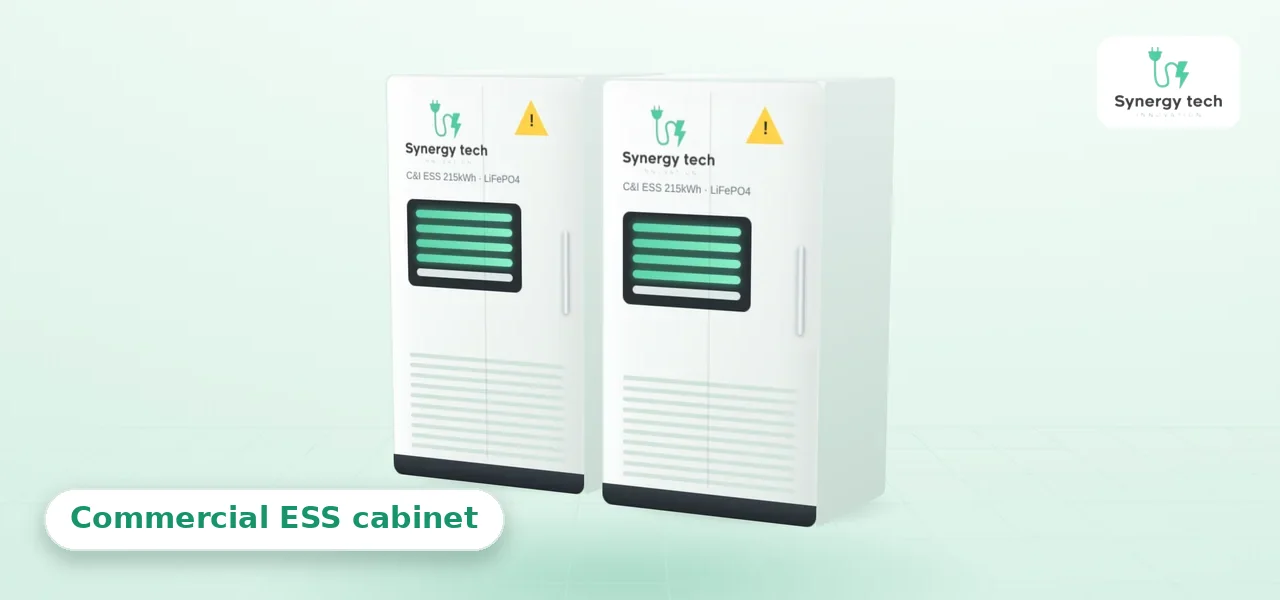
ESS batteries are the battery packs inside an energy storage system: they store electricity when it is cheap or plentiful and release it when you need it. Most ESS batteries sold today use lithium iron phosphate (LiFePO4) cells, controlled by a battery management system. This guide covers what an ESS is made of, the sizes it comes in, how to read its specs, how to size one and which safety standards matter. What Are ESS Batteries? ESS batteries are rechargeable batteries designed for stationary energy storage rather than for vehicles or phones. They sit in a home, shop, factory or solar farm and cycle every day, often for ten years or more. ESS stands for energy storage system. When people say “ESS battery” they usually mean the whole cabinet or wall unit, not just the cells inside it. Why LiFePO4 became the standard chemistry Two lithium chemistries dominate: lithium iron phosphate (LFP) and nickel manganese cobalt (NMC). NREL’s Annual Technology Baseline notes that LFP became the primary chemistry for stationary storage starting in 2022. LFP gives up some energy density, but that matters little for a battery that never moves. In return it offers a more stable chemistry and a longer cycle life. What Is Inside an Energy Storage System? An ESS is more than a big battery. Instead, it is a set of parts that each do one job, and a weak part limits the whole system. Part What it does What to check Battery cells and modules Store the energy as chemical charge Cell chemistry, grade and maker Battery management system (BMS) Protects cells from overcharge, deep discharge, heat and imbalance Current rating and communication with the inverter Power conversion system (PCS) or inverter Converts DC battery power to AC and back Power rating in kW and efficiency Energy management system (EMS) Decides when to charge and discharge Scheduling, solar and grid settings Thermal management Keeps cells in their safe temperature range with air or liquid cooling Rated operating temperature Enclosure and fire protection Houses the system and limits damage if a fault happens IP rating, detection and suppression The BMS and the EMS are often confused. The BMS protects the battery, while the EMS decides how the battery is used. Types of ESS Batteries by Size ESS batteries come in three broad size classes. The class decides the voltage, the cooling method and the standards that apply. Class Typical energy Common format Typical user Residential 5 kWh to 20 kWh Wall mounted or stacked 48V modules Homes with solar or frequent power cuts Commercial and industrial 30 kWh to 500 kWh Floor cabinets, high voltage racks Shops, offices, factories, farms Utility scale Megawatt hours Shipping container systems Grid operators and solar parks Low voltage and high voltage systems Most home ESS batteries run at a nominal 51.2V, built from 48V class modules. Our 48V lithium battery guide explains that voltage in detail. Larger cabinets connect many modules in series to reach several hundred volts. As a result, higher voltage lets the system move more power with less current. How to Read ESS Battery Specs kWh is energy, kW is power Kilowatt hours (kWh) tell you how much energy the battery holds. Kilowatts (kW), on the other hand, tell you how fast it can deliver that energy. Divide kWh by kW to get the duration at full power. A 10 kWh battery with a 5 kW inverter can supply full power for about 2 hours. Usable capacity Some makers list total capacity and others list usable capacity. So always ask for usable kWh, because that is what actually reaches your loads. Round trip efficiency Round trip efficiency is the share of energy you get back out after charging the battery. According to US Energy Information Administration data, the US utility scale battery fleet averaged a monthly round trip efficiency of 82% in 2019. That figure includes inverter and auxiliary losses at real sites. A battery datasheet may quote a higher figure measured at the cell or DC level, so check what is included. Cycle life and warranty Cycle life is how many full charge and discharge cycles the battery delivers before its capacity falls to a set level, often 70% or 80%. A cycle number only means something when you know the depth of discharge and temperature behind it. What Do ESS Batteries Do? Backup during power cuts The battery takes over when the grid fails, so lights, internet, fridges and machines keep running. For homes, this is the main reason to buy one. Storing solar power for the evening Solar panels produce the most around midday, while most homes use the most in the evening. The battery stores the midday surplus so you use your own solar at night. Cutting peak demand charges Many commercial tariffs charge for the highest power drawn in a billing period. In that case, an ESS can discharge during those peaks, so the meter sees a lower maximum. Shifting to cheaper hours Where electricity costs less at night, the battery charges then and discharges in the expensive daytime hours. Savings depend entirely on your local tariff. How to Size ESS Batteries 1. List what must keep running Write down each load and its watts. Then estimate how many hours it runs during an outage or each evening. 2. Find your daily energy need Multiply watts by hours for each load and add them up. A fridge at 150W for 24 hours, lights at 200W for 6 hours and a router at 20W for 24 hours come to 3.6 + 1.2 + 0.48 = 5.28 kWh. 3. Add losses and headroom Divide by the round trip efficiency, then add a margin so the battery is not emptied every day. With 90% efficiency and 20% headroom, 5.28 kWh becomes about 7 kWh. 4. Check the power rating Add up the loads that may run at the same time, including motor start surges. The inverter and the BMS must both handle that peak. 5.